
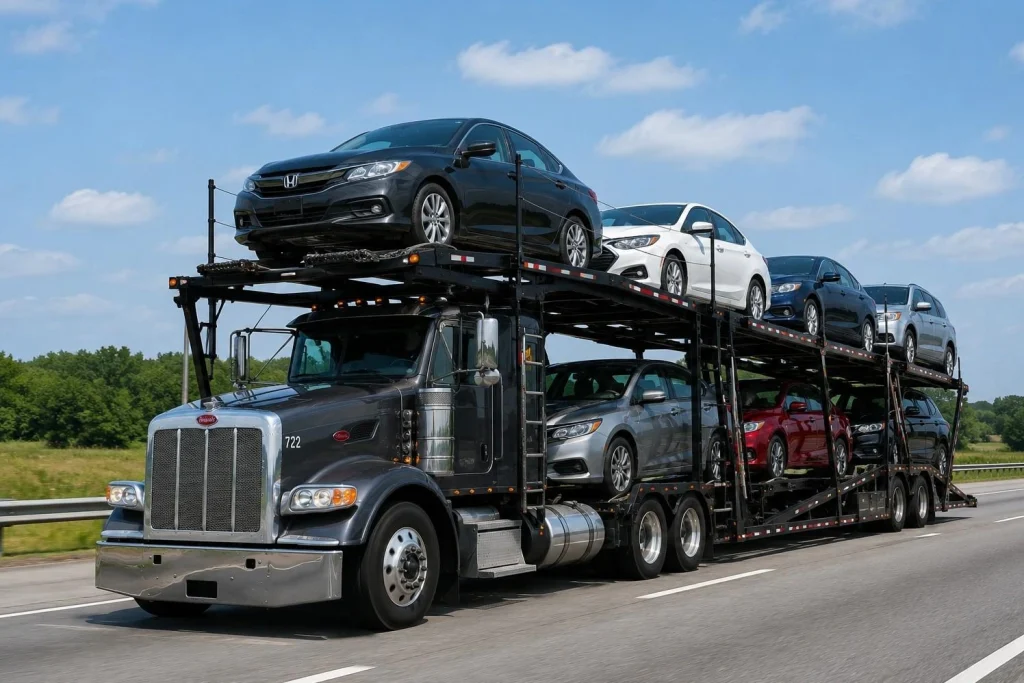
When arranging vehicle shipping, one of the first decisions is whether to choose open or enclosed car transport. Both methods can move vehicles over short or long distances, but they offer different levels of environmental protection, pricing, and equipment options.
The right choice depends on the vehicle you are shipping, your budget, your preferred schedule, and the importance of limiting exposure to outdoor conditions. Understanding the differences can help you select a service that fits your needs.
What Is Open Car Transport?
Open car transport uses an open trailer to move multiple vehicles along a transportation route. It is a common method for shipping everyday sedans, hatchbacks, SUVs, and other eligible automobiles.
Because open carriers can transport several vehicles at once, the transportation cost may be lower than enclosed shipping. Open carriers are widely used, and availability can be favorable on established routes, although scheduling still depends on demand and location.
The main trade-off is exposure. Vehicles transported on open trailers are exposed to weather, dust, road spray, and other outdoor conditions during the journey.
For many standard vehicles, open transport offers a practical balance between cost and convenience. However, owners should assess the vehicle’s condition and their preferences before choosing this method.
What Is Enclosed Car Transport?
Enclosed car transport uses a covered trailer to shield vehicles from many outdoor conditions. It is often considered for classic cars, exotic sports cars, luxury automobiles, collectible vehicles, and cars with specialized finishes.
The covered trailer reduces direct exposure to rain, airborne debris, and road spray. Depending on the provider, enclosed carriers may also offer specialized loading equipment or handling arrangements for certain vehicles.
These additional features are not universal. Customers should confirm the trailer type, loading method, securing procedures, and insurance arrangements before booking.
Enclosed transport usually costs more than open transport. Its value depends on whether the added protection and specialized service justify the higher price for your particular vehicle.
Open vs. Enclosed Car Transport: Key Differences
| Feature | Open transport | Enclosed transport |
|---|---|---|
| Trailer type | Open carrier | Covered trailer |
| Weather exposure | Greater exposure | Reduced direct exposure |
| Typical cost | Generally lower | Generally higher |
| Vehicle capacity | Often multiple vehicles | Often fewer vehicles |
| Common use | Everyday cars and SUVs | Classic, luxury, and specialty cars |
| Availability | Often broad on established routes | May be more limited |
| Best consideration | Practicality and budget | Additional environmental protection |
Actual costs, availability, capacity, and equipment depend on the carrier and route.
Which Option Is More Affordable?
Open transport is generally the more economical option because carriers can share transportation costs across multiple vehicles and commonly operate on established routes.
Enclosed transport can cost more due to specialized equipment, reduced capacity, and different operating requirements. The difference varies with distance, route demand, vehicle dimensions, scheduling, and carrier availability.
When comparing quotes, make sure you are comparing similar services. A quote for open transport should not be evaluated against an enclosed quote without considering the different equipment and protection offered.
Which Option Provides Better Protection?
Enclosed transport provides additional shielding from direct weather exposure and road debris. This can be particularly important for vehicles with rare finishes, restored bodywork, or high collectible value.
Open transport does not provide the same physical barrier against outdoor conditions. Nevertheless, it remains a widely used method for everyday vehicles.
Neither method removes all transportation risks. Loading, unloading, road incidents, mechanical problems, and other events can still cause damage. Ask about the carrier’s insurance arrangements and review the applicable coverage exclusions, limits, deductibles, and claims procedures.
Which Vehicles Should Use Open Transport?
Open transport may suit owners who want to ship a standard daily-use vehicle without paying for the additional features of enclosed shipping.
It can be appropriate for many sedans, hatchbacks, family SUVs, and eligible pickup trucks. It is also commonly considered for interstate relocations, vehicle purchases, dealership transfers, and other routine shipping needs.
Before selecting an open carrier, disclose any unusual vehicle dimensions, modifications, low clearance, or mechanical problems.
Which Vehicles Should Use Enclosed Transport?
Enclosed transport may be worth considering for classic automobiles, exotic vehicles, luxury models, collector cars, show vehicles, and recently restored cars.
Owners may choose it to reduce environmental exposure during transit. Vehicles with low ground clearance may also benefit from specialized loading equipment, if the selected carrier provides it.
The decision should be based on the actual vehicle and shipping requirements rather than the assumption that every expensive car automatically requires enclosed transport.
Questions to Ask Before Booking
Before confirming your shipment, ask the provider:
-
What type of carrier will transport my vehicle?
-
What pickup window and delivery estimate should I expect?
-
What insurance coverage applies to my shipment?
-
Are there extra charges for my vehicle’s size or condition?
-
What payment and cancellation terms apply?
-
How should I document the vehicle’s condition at pickup and delivery?
Written answers can make it easier to understand the arrangement and compare competing quotes.